Welcome back to Meterian’s next Vulnerability Focus report edition. This week we are talking about Javascript vulnerabilities which need to be addressed. Both have been published in recent months and have a medium severity threat. The first vulnerability could result in a cross-site scripting attack whilst the second is to do with a cryptographic issue. There are over 1.6 billion websites in the world, and JavaScript is used on 95% of them, be sure to check if you could be affected.
CVE-2019-12043: there is a vulnerability in remarkable 1.7.1 affecting the unknown processing in the library lib/parser_inline.js of the component URL Handler. Manipulation of this component can lead to cross-site-scripting.
CVE-2019-9155: OpenPGP.js has a cryptographic issue which could allow attackers to conduct an invalid curve attack and gain the victim’s ECDH private key
Read up Javascript users! This vulnerability was posted last year in 2019, yet because of the significant amount of people using Javascript for their web apps, we thought it would be useful to inform people who might not have had time to address the issue.
This vulnerability has been found in remarkable 1.7.1 and is considered problematic. The component mishandles URL filtering, which allows attackers to trigger an XSS attack via unprintable characters.
Cross site scripting is an injection of malicious code into a trusted web app. As described above, this happens when the user input is not sufficiently validated either on the client or server side. The scripts injected will have malware which then allows the hacker to do a series of exploits. What is more concerning is that the attack could then alter the appearance of the web app and also commence attacks on users visiting that site.
This Javascript vulnerability was published in September 2019 and has a medium severity score of 5.9.
The vulnerability is a cryptographic issue in OpenPGP.js up to and including 4.2.0. This is a library in Javascript and therefore can be used on nearly any device. Users do not have to install a gpg on their machines in order to use this library, and therefore it can be reused in other projects that have browser extensions or server apps. Its main function is to sign, encrypt, decrypt and verify any kind of text, specifically emails.
The problem allows hackers, who can provide forged messages and get feedback on whether decryption of these messages succeeded, to eventually figure out and extract the victim’s private key.
To avoid this type of attack in the future, developers should identify sensitive data and encrypt them, even if stored on a hard drive. There should also be an effort to ensure the data cannot be overwritten by overwriting sensitive memory locations straight after the data is no longer needed in memory.
In regards to this specific vulnerability, it is suggested to upgrade openpgp to version 4.3.0 or above.
That is it from us…for now! Make sure to spread the word on these Javascript vulnerabilities in order to help protect your apps or the apps you develop. Read also our post about javascript vulnerabilities and remote code execution.
As you all know, open-source vulnerabilities are discovered daily, so you can expect us to be back with new vulnerabilities very soon!
Knowing is half the battle. The other half is doing. Let Meterian help your dev team stay in the know and on top of the latest updates to secure your apps continuously. Sign up here to download the Meterian client today. You’ll get an instant analysis of your first project for free. See the risks immediately and know which components to remove or upgrade to secure your app.
Greetings App Sec community! Meterian is back with some .NET vulnerabilities which need some attention. Both these vulnerabilities are of a medium to high threat nature, so make sure to give this a read, it’ll be worth your while. The first case deals with a cross-site scripting vulnerability, whilst the second can cause a core denial of service issue. Don’t let hackers use this as a backdoor to your systems and networks. Stay protected people!
CVE-2019-1301: .NET Core suffers from a denial of service vulnerability when it improperly handles web requests.
CVE-2019-12562: There is stored cross-site scripting vulnerability in DotNetNuke (DNN) versions before 9.4.0, allowing attackers to store and embed malicious script into the administration notification page.
.NET Core / Microsoft.NetCore.App: 2.1.0-2.1.12 or 2.2.0-2.2.6
System.Net.Sockets: 4.3.0
The first .NET vulnerability we bring to your urgent attention is a denial of service vulnerability which occurs when .NET Core improperly handles web requests. The affected versions are in any .NET Core based application running on .NET Core 2.1.0 to 2.1.12 or 2.2.0 to 2.2.6, and System.Net.Sockets 4.3.0. This is regarded as a high threat to security and should be tended to immediately.
How can you confirm if your .NET application is affected? Run the dotnet –info command to see the list of the versions you have installed. You will then see output as shown below:
If you see that you have a version of .NET Core which is less than 2.1.13 or less than 2.2.7, then unfortunately you are vulnerable. The same applies if you are using the meta-package “Microsoft.NETCore.App”, with the same version range. Please note that this also applies to the package System.Net.Sockets version 4.3.0.
What is .NET Core? It is an open source, development platform which is maintained by Microsoft and the .NET community on GitHub. It can be used to build device, cloud and IoT applications.
Why is this vulnerability such a threat? Firstly, the attacker who is successful in the exploit of this vulnerability would use the denial of service against the .NET Core web application. Not only can this vulnerability be exploited remotely, but also without authentication of the user-cum-attacker. A denial of service attack (DoS) is focused on making a resource unavailable for the purpose of its design. The unavailability of a resource can come in many forms: manipulating network packets, programming, logical or resource handling vulnerabilities. Sometimes the attacker may execute arbitrary code to access critical information or execute commands on the server. Generally, this type of attack would cause response delays, large-scale losses, interruption to services and therefore an impact on availability.
So how can you fix this issue? It is recommended to install the latest version of .NET Core but it depends on the versions which you have already installed. You may need to update if you have either version 2.1 (upgrade at least to 2.1.13) or 2.2 (upgrade at least to 2.2.7). If you are using the meta-package, upgrade the meta-package following the same version numbering. Also, if you are using System.Net.Sockets, please upgrade to version 4.3.1
You read right. DotNetNuke (DNN) has a cross-site scripting vulnerability before versions 9.4.0 which is allowing remote attackers to store and embed malicious script into the admin notification page. The success of this exploit occurs when an admin user visits a notification page with stored cross-site scripting.
A little information on DNN. First of all, it is a program that runs on Microsoft ASP.NET. It is also a framework, meaning it is a program designed to be extended. When you install DNN it can allow the creation of thousands of individual portals. These portals can then display pages and the pages display modules. More importantly, DNN is an open source web content management system meaning many businesses around the world rely on it for organisational purposes. DNNSoftware.com has over 1million registered members since 2013 and is used on nearly 750,000 websites globally. This might illuminate how many people could be affected by this vulnerability and why this needs urgent attention to avoid getting hacked.
The severity of this vulnerability is emphasized through the fact that stored cross site-scripting is the most dangerous type of cross-site scripting. The exploit could be used to perform any action that has administrator privileges. This includes: managing content, adding users, uploading backdoors to the server and more.
Once this vulnerability had been detected it was reported to the DNN Software Security Department who have fixed the problem and released a patch. Users should update to the latest version 9.4.0 of DNN to avoid any security holes within their systems and networks.
That is it from us…for now! Make sure to spread the word on these .NET vulnerabilities in order to help protect your apps or the apps you develop. But as you all know, open-source vulnerabilities are discovered daily, so you can expect us to be back with new vulnerabilities very soon!
Knowing is half the battle. The other half is doing. Let Meterian help your dev team stay in the know and on top of the latest updates to secure your apps continuously. Sign up here to download the Meterian client today. You’ll get an instant analysis of your first project for free. See the risks immediately and know which components to remove or upgrade to secure your app.
Happy Valentine’s Day! Meterian is feeling the love, so we want to share it by telling you the best way your business can love their developers! In this article we highlight the benefits and costs of using open-source software. We’re also going the extra mile to give you tips on how to secure and maintain these components without slowing down your developers – the guardians of your business’ software that can propel you ahead of competitors.
Here’s a little history lesson for you to begin with! Back in the 1940s-70s, software innovated at a slow pace. It wasn’t even regarded as a valuable asset in the working environment. The 1980s came and we see how software copyright was introduced, commencing a period where there was a boom in software innovation and a burst in software companies. As the decades went on, people started to realise the value of open source software.
Developers are able to become creative and help solve problems in the software space when using open source solutions. It is the consumer and producer relationship that makes open source software thrive. As a result, there is more software availability for all users without having to reinvent the wheel. This in turn helps organizations. Recent research from Harvard Business School has shown that open source contributing companies capture up to 100% more productive value from open source than companies that do not contribute back. It creates a snowball effect: the more companies use it, the more the community is able to survey, criticize and praise it. Therefore, this strengthens the quality of the software used, including its security, usability and stability.
Open source software also comes with management benefits. Organizations tend to struggle when managing huge volumes of structured and unstructured data. This is where open source solutions can help! It helps to simplify business processes, as well as saving resources for things which are not needed for the success of a business. Essentially, it provides more flexibility for the company.
Taking a look at customer value is important. Due to the flexibility of open source software solutions, companies are able to customize to suit the needs of their particular customers. For example when you integrate two pieces of software. This requires less time than if the company were to write the integration software from scratch themselves. Therefore, it benefits both the company and their customers as well. Customers might even be willing to pay more for better solutions if they see this software is meeting their needs so efficiently and rapidly. It is all about viewing open source software as a resource and a powerful motivator.
Moreover, open source components are attractive to cyber attackers. Firstly, open source vulnerabilities within components are discovered daily. Secondly, traditional testing tools and methods are ineffective in identification and therefore few companies understand the components being used in their applications. This lack of awareness leaves organizations increasingly exposed to an attack. For example Hollywood Presbyterian Hospital in California suffered a ransomware attack due to an outdated JBoss server software. The attacker uploaded malware to the out-of-date server without any interaction with a victim. This resulted in delayed patient care and the hospital had to pay $17,000 to recover access to files and the network.
A further cost or strain is the need to constantly maintain, test and secure these components. For example, in 2018 Sonatype released its fourth annual State of the Software Supply Chain Report and showed how software developers had downloaded more than 300 billion open source components in the past 12 months, 1 in 8 of those components having contained known security vulnerabilities.
Not catching these security bugs early on in the development process can lead to very costly and damaging outcomes.
How to maintain and secure open source components?
Firstly, you can start by making an inventory of all your open source components used when developing software. This inventory must include all the components, versions in use and the download locations for each project. Software bill of materials (SBoM) would be this inventory.
There is also a need to map out any known security vulnerabilities. The National Vulnerability Database (NVD) is a great place to provide information on publicly disclosed vulnerabilities in open source software. However, make sure you do not use this as your sole source for vulnerability information, as sometimes not all vulnerabilities are reported and the format of NVD records make it difficult to see which versions have been affected. Meterian uses several sources in addition to the NVD.
Open source solutions are a brilliant resource. But to maintain its benefits there needs to be an effort to secure the open source components to lower the risk of them being vulnerable to cyber attacks. For example, a study conducted by Kula et al. on migrations of 4600 GitHub projects showed that 81.5% of them do not update their direct library dependencies, sometimes even in cases when they have been affected by publicly known vulnerabilities. This emphasizes the lack of awareness about security vulnerabilities within open source software. For this reason, to secure your open source components there is an urgency to upgrade software and keep on top of the known vulnerabilities.
Security is a community effort. There is a testing process for each project that is open to everyone. Developers using open source software are able to judge. This community of users are constantly evaluating and testing the security of certain components. Following this, there will be feedback on issues that have been found. For this reason, building open source software is safer than proprietary software because more people can test and contribute to its security. At the same time, there must be care about the code contributions accepted. A governance process and reviews in regards to any open source contribution should be made.
Constant vigilance is key. More than 3,600 new open source vulnerabilities are discovered every year and a significant amount appear daily. Developers need to make sure their use of open source software is secure. Asking questions such as, is the code I am using good? Does it have any bugs? Due to vulnerabilities being identified on a daily basis–some have more high risk than others–there needs to be a practice within organizations to monitor or test each time the software changes.
Meterian helps businesses get the most out of their software investments
Open source software has been changing how our world works, giving us a sustainable ecosystem that can work for everyone as long as it is looked after.
Meterian can automatically inventory your open source components and analyse them to check if they are up-to-date or have any publicly disclosed security and licence risks. Get started on building a proactive defence for your customer data and software IP. Love your developers and let them innovate freely while using Meterian to secure your open source components. We can block insecure code before it goes live. It will save you and your developers time and money, allowing your business to be less vulnerable to cyber attacks.
Check if there are any open source security holes in your company’s website that puts your business at risk of a data or IP breach before it’s too late.
It’s that time of the week again folks. Meterian has two new Node.Js vulnerabilities to inform you on. Both are ranked a severity score of 7.5 and therefore considered to be of urgent attention. The first vulnerability concerns the bson-objectid package and the second the csv-parse module. Act fast and don’t let these vulnerabilities sit within your software/networks, or you could be at serious risk of a cyber attack.
CVE-2019-19729: There is an issue discovered in the bson-objectid package version 1.3.0 for Node.js. Hackers could generate a malformed objectid, resulting in objects in arbitrary forms to bypass formatting if they have a valid bsontype.
CVE-2019-17592: The csv-parse module before version 4.4.6 for Node.js is vulnerable to Regular Expression Denial of Service. An attacker can cause a program to spend an unnecessary amount of time processing.
Read up Node.js users you’ll want to know about this vulnerability! This was discovered on the 12th December 2019 by user Xiaofen9 on Github who noticed that ObjectID() allows an attacker to generate a malformed objectid by inserting an additional property to his user-input.
What is bson-objectid? This component allows you to create and parse ObjectIDs without using bigger components, such as other fully-fledged bson libraries.
The problem is that in certain conditions the input object will not be checked and will be returned early. This means that objects in arbitrary (potentially malicious) forms can completely bypass formatting and validation.
But what does a privilege escalation vulnerability actually entail? It is when a malicious user gains access to the privileges of another user account in a target system. This allows hackers to use these privileges to steal confidential data, run administrative demands or deploy malware.
What can you do to fix this? Unfortunately, at this time of writing there is still no remedy to this vulnerability. However, we recommend to cease using this component or switch to a full bson library like bson.
Oh yes…we are not done yet. Here is another Node.js vulnerability for you all! This was discovered on the 14th of October and given a high score of 7.5 by NVD. The affected module is csv-parse which is a CSV module. This project is a parser which converts CSV text inputs into objects. It uses the Node.js stream.Transform API and provides a simple callback-based API. Released for the first time in 2010, it is very easy to use and helps the big community that uses it with large data sets.
Why is Regular Expression Denial Service a backdoor for hackers? The attacker will insert in the file a malicious string which they know would take a very long time to evaluate. This means the attacker can make the user spend an excessive amount of time processing, resulting in the user’s executed commands to slow down or become unresponsive. Thus, the availability of the system degrades. To make things worse, the exploit can be easily and remotely executed depicting clearly why this vulnerability is classified as problematic.
The best thing to do to avoid getting caught out by such exploit, is to upgrade to version 4.4.6 and above.
That is it from us…for now! Make sure to spread the word on these critically-rated Node.js vulnerabilities in order to help protect your apps/the apps you develop. But as you all know, open-source vulnerabilities are discovered daily, so you can expect us to be back with new vulnerabilities very soon!
Knowing is half the battle. The other half is doing. Let Meterian help your dev team stay in the know and on top of the latest updates to secure your apps continuously. Sign up here to download the Meterian client today. You’ll get an instant analysis of your first project for free. See the risks immediately and know which components to remove or upgrade to secure your app.
Alas, with the growth of innovation in this sector, there also comes the risk of cyber attacks. The healthcare sector in particular seems to be a major target for cyber criminals. Why is this? What is the financial impact? And most importantly what can be done?
Why do cyber criminals target the healthcare sector?
There are many reasons why the healthcare sector is a target:
One of the main reasons has to do with the financial worth of the masses of patient information hospitals store. With the introduction of GDPR (May 2018) it has never been so crucial for hospitals and businesses to keep patient data secure.
Medical devices tend to be easy entry points for cyber attackers. Due to these devices only being used for medical practices, cyber security is not within the design of the product. Although these devices will not store patient data, hackers can launch an attack on the server which holds important information. For example, a vulnerability was discovered in the work of insulin pumps of Johnson & Johnson. This vulnerability could have allowed attackers to get control of the device via Wi-Fi and provoke an overdose of insulin in the patient’s blood.
Medical staff are accessing data remotely on different devices and networks, which provides another entry point for attackers. The problem is that if one device is hacked, this might leave the rest of the organisation vulnerable.
Despite the healthcare sector progressively innovating its practices, staff are still reluctant to disrupt working practices with the introduction of new technology. This creates weaknesses in the healthcare organisation’s IT systems because it produces outdated software that allows entry points for cyber criminals.
The result of costly budgets, lack of resources and time constraints make it hard for healthcare staff to be fully educated in cybersecurity practices.
The vast amount of devices used in a hospital makes it hard for IT specialists to protect the entire hardware network against attacks.
A very serious reason why the healthcare sector is targeted is also to do with international espionage. For example:
John Riggi, a former ex-FBI cyber specialist: Hospitals are “being targeted by hostile nation-states for theft of intellectual property related to medical research, innovations, cancer studies, population health studies, research of medicine and clinical trials, and also potentially for conversion for military use such as biological weapons”
They might target hospitals to acquire the medical details of business leaders, politicians or military figures. An example is seen when the Singaporean government health database was hacked in 2018. Prime Minister Lee Hsien Loong was amongst the 1.5 million whose personal data was stolen from the database.
Another problem is if hackers target hospitals near military installations this could give sensitive records of military personnel and worse, insight into where troops might be deployed.
Popular cyber attacks within the healthcare sector
The most popular attacks to the healthcare sector have shown to be:
Ransomware attacks
Ransomware is a type of malware that will infect systems and files, making them inaccessible until someone pays a ransom. For the healthcare system, this slows down processes and often forces hospitals to turn to pen and paper. A recent example of this was seen last November with the ransomware attack on French hospitals in Rouen. More worryingly, the 2017 Healthcare Cybersecurity Report suggested ransomware attacks on the healthcare sector will quadruple by 2020 and ransom-takers are using more sophisticated tactics to hack into systems, as 350 different variants of ransomware were observed in 2018 compared to 241 in previous years.
Often these attacks will affect machines through: phishing emails with malicious attachments, a user clicking on a malicious link, or viewing an advertisement containing malware. But an entry point that is often disregarded is ransomware via an outdated component or software. For example Hollywood Presbyterian Hospital in California suffered a ransomware attack due to an outdated JBoss server software. The attacker uploaded malware to the out-of-date server without any interaction with a victim. This resulted in delayed patient care and the hospital had to pay $17,000 to recover access to files and the network. What was interesting was that the attackers had used an open source tool, JexBoss, to search the internet for a vulnerable JBoss server and networks which had been infected. Organisations that handle healthcare data have to make sure to update their systems as the majority of healthcare ransomware attacks are malware related.
What is a JBoss Server? This is an open source application server program used for developing and deploying enterprise java applications, services and web portals. JBoss released its last version (7.1.1) in 2012, as it then switched its name to Wildfly in its next release. So if you are running an application server with the name JBoss, it is out of date and has been for a very long time.
Data breaches
Data breaches can occur for many different types of reasons, from credential stealing malware to insider threats to lost devices. The reason why data breaches are so common within the healthcare sector is because Personal Health Information (PHI) is more valuable on the black market than financial or Personally Identifiable Information (PII).
This shows the value of patient data financially. However, PHI can be valuable also to target victims with fraud scams by taking advantage of their medical conditions. Cyber criminals have also been known to use stolen patient data to access prescriptions for their own use or resale.
With the enforcement of GDPR since May 2018, securing patient and medical records has never been so important.
Insider threats have shown to stem from a lack of cybersecurity training amongst staff or employees maliciously giving away access codes or them purposefully selling PHI or PII for profit. For example, Anthem a Medical Insurance company learned in 2017 that an employee had been misusing and stealing Medicaid member data — up to 18,000 of PHI — as early as July 2016. This demonstrates the cautiousness there needs to be within the staffing of the healthcare sector to ensure people are not misusing PHI.
Business email compromise
Business email compromise is when hackers use spoof emails to compromise an account by tricking the employee to transfer money to a fake account. Normally, the fraudsters pretend to be a person of authority within the company to seem as if they might be asking a legitimate request. This has been successful because fraudsters tend to do a lot of research on their targets and will make sure to convincingly impersonate the individual whilst only sending the email to select few people.
Although many security executives think that their programs are providing sufficient protection, these programs might not be securing the actual patient or member data. There needs to be an understanding between compliance-driven strategy which is when programs do not stand up to the test of the attackers and security-driven strategy when programs are designed to deal with attackers and the threats they create. This means a refocus on the actual risks of the healthcare infrastructure:
Where is the patient data?
Where does it live?
How is it stored?
How is it protected?
Are these protections sufficient?
Therefore when new technologies are in place there can also be a focus on:
If the technologies are fully supported
If the technologies are deployed across the organisation’s entire enterprise
That the technologies have no limited capacities
That the technologies are never unmonitored
Both patient care and business continuity are important to healthcare organisations. As hospitals and caregivers rely on technology to deliver greater gains for more timely care and more efficient business processes, they must ensure their systems are secure and stable for everyday operations. This requires a cyber resilient approach that addresses people and processes, as well as the technology used. Read Meterian’s blog post on how your organization can become more cyber resilient.
In honour of Meterian introducing Python into their beta production, here are two Python vulnerabilities which you should look out for. We don’t like it when systems or computers behave in unexpected ways. It’s worse when such outcomes result in a cyber security incident. This month’s Python vulnerabilities can cause unexpected behaviours which hackers could exploit to compromise the integrity of your system in unpredictable ways. Don’t waste any time as you could be affected, so read on and learn how to avoid these risks.
CVE-2019-18874: through python-psutil versions 5.6.5 there are risks of double free consequences. Attackers could use this issue to cause psutil to crash, therefore a denial of service, and possibly execute arbitrary code.
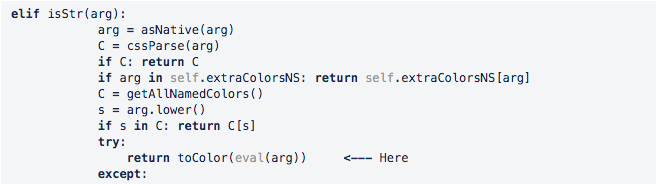
CVE-2019-17626: ReportLab through 3.5.31 allows remote code execution because of toColor(eval(arg)) in colors.py. This vulnerability could affect confidentiality, integrity, and availability within your software/network.
Indeed…Python has a vulnerability within the package python-psutil. This was discovered on the 11th November 2019 by Riccardo Schirone who noticed that the psutil incorrectly handled certain reference counting operations.
Python-psutil, is a Python package which provides convenient functions for accessing system process data. It is a cross-platform library for retrieving information on running processes and system utilization in Python. It is mainly used for system monitoring, profiling and limiting process resources and management of running processes. Psutil supports a range of platforms: Linux, Windows, macOS, FreeBSD, OpenBSD, NetBSD, Sun Solaris and AIX.
How does this vulnerability happen? It was caused by incorrect reference counting handling within for/while loops that convert system data into said Python objects. If an error occurred, the reference counter would be dropped twice. In this case, the computer system’s memory storage is mishandled. Essentially, a double free releases the same area of memory twice.
How can hackers take advantage of the system? They could use this vulnerability to cause the psutil program to crash which could lead to a denial of service and potentially the execution of arbitrary code. This execution of arbitrary code will provide the attacker with the ability to execute any command of their choice in a target machine or process. Like landmines, this vulnerability is unpredictable and hard to spot. The idea is that the hacker is waiting for the system to trip up in order for the “landmine” (malicious code) to set off and infect the users’ system.
To remedy this vulnerability, please upgrade to version 5.6.6 or higher of python-psutil. Upgrade fast Python users, you don’t want to be at risk of a cyber attack.
Yes that’s right! We have one more Python vulnerability to inform you on. This one is found within ReportLab up to 3.5.31 and it has allowed remote code execution because of toColor(eval(arg)) in colors.py. This vulnerability was found on the 10th October 2019 and has been classified as critical. The issue is affecting the function toColor of the file colors.py.
The issue with this vulnerability is that the manipulation of the input value to <span color=” can lead to a privilege escalation vulnerability. Not only can this attack be initiated remotely but it will impact a user’s confidentiality, integrity and availability. To make matters worse, it has been said that the price of this exploit be around USD $0-$5k since last stated on 16/10/19.
To remedy this vulnerability, please upgrade to version 3.5.32 or higher. This is different from the recommendation of NVD which suggests to upgrade to version 3.5.26 or higher. NVD also references the incorrect CWE, which should be corrected to CWE-95: Improper Neutralization of Directives in Dynamically Evaluated Code (‘Eval Injection’). Based on Meterian’s analysis, we only see the remediation implemented in versions 3.5.32 or later. You can verify the code here.
Spread the word on these critically-rated, easy-to-exploit Python vulnerabilities in order to help the app sec community defend against unwanted exploits. But as you all know, open-source vulnerabilities are discovered daily, so you can expect us to be back with new vulnerabilities very soon!
Knowing is half the battle. The other half is doing. Let Meterian help your dev team stay in the know and on top of the latest updates to secure your apps continuously. Sign up here to download the Meterian client today. You’ll get an instant analysis of your first project for free. See the risks immediately and know which components to remove or upgrade to secure your app.
Attention to all Java users! Yes, we are back with a brand new set of Java vulnerabilities that I know you would like to get some juicy info on. During September 2019, two Java vulnerabilities have been discovered within the Apereo CAS versions before 6.1.0-RC5 and the Apache Tapestry versions between 5.4.0 to 5.4.3. The former open source vulnerability has been given a score of 8.1 whilst the later a higher score of 9.8 in regards to severity. So hurry, read up and don’t waste any time. You could be affected!
CVE-2019-10754 Apereo CAS (org.apereo.cas:*) components could allow a remote authenticated malicious user to obtain sensitive information, caused by the use of weak RandomStringUtils PRNG algorithm.
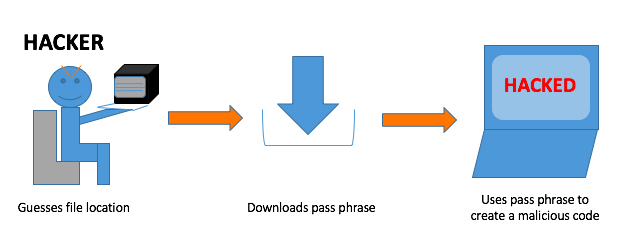
CVE-2019-0195 Manipulating classpath asset file URLs, an attacker could guess the path to a known file in the classpath and have it downloaded.
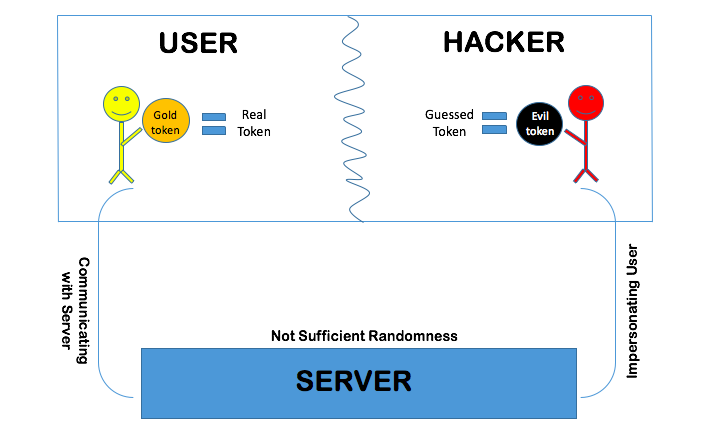
That’s right folks! Java has another vulnerability. Due to multiple classes using Apereo CAS (before the release of 6.1.0-RC5) and making use of apache commons-lang3 RandomStringUtils for token and ID generation, this has made them predictable and resulted in a cryptography weakness.
For example, org.apereo.cas:cas-server-support-simple-mfa is a package that allows Apereo CAS to act as a multifactor authentication provider by itself. This generates tokens and allows them to be sent to end-users via pre-defined communication channels such as email or text message. Please also note that this vulnerability affects multiple components of the Apereo CAS framework.
So what is the threat? Well, the affected versions of this package are vulnerable to Insecure Randomness, as it relies on apache commons-lang3 RandomStringUtil which can produce predictable results. So, this could allow an attacker to generate their own unique Ticket ID due to insufficient randomness. In other words, the attacker could guess the encryptionSecret used within GenerateJwtCommand and allow them to impersonate a user. This also means the attacker will have access to sensitive information caused by the use of the weak RandomStringUtils PRNG algorithm.
But don’t fret. There is a solution. It has been recommended to upgrade org.apereo.cas to version 6.1.0-RC5 or higher.
Java users, don’t give cyber criminals the chance to access your data. Act fast and upgrade org.apereo.cas!
We are not done yet folks! We have one more Java vulnerability to inform you guys on. Within the Apache Tapestry versions 5.4.0 to 5.4.3, the manipulating classpath asset file URLs allow an attacker to guess the path of a known file in the classpath and, as a result, download it. This was discovered on the 16/09/19 by Thiago H. de Paula Figueiredo.
The Apache Tapestry is an open-source framework for creating web applications in Java or other JVM languages. It also complements and builds upon standard Java Servlet API and works in any application server. Apache Tapestry has a long history. It has the oldest code, dating all the way back to 2000. This has resulted in many releases; developers now concentrate on Tapestry 5 as opposed to 3 and 4.
What is tapestry.hmac-passphrase you say? This symbol is used to configure hash-based message authentication of Tapestry data stored in forms, or in the URL. In other words, your application is less secure and therefore more vulnerable to denial-of-service attacks. Especially when this symbol is not configured.
With various techniques, an attacker could guess the path to a known file in the classpath and have it downloaded. If the attacker found the file with the value of the tapestry.hmac-passphrase configuration symbol, then they could use it to craft a Java deserialization attack, thus running a malicious injected Java code.
The recommended mitigation for this vulnerability has been suggested to upgrade to Tapestry 5.4.5, which is a drop-in replacement for any 5.4.x version.
That is it from us…for now! Make sure to spread the word on these critically-rated Java vulnerabilities in order to help the app sec community defend against unwanted exploits. But as you all know, open-source vulnerabilities are discovered daily, so we recommend you regularly scan your code repositories for new known vulnerabilities. Don’t get caught off guard!
Knowing is half the battle. The other half is doing. Let Meterian help your dev team stay in the know and on top of the latest updates to secure your apps continuously. Sign up here to download the Meterian client today. You’ll get an instant analysis of your first project for free. See the risks immediately and know which components to remove or upgrade to secure your app.
It’s that time of the week people. Meterian is back with information on a brand new set of vulnerabilities! We once again turn our heads to focus on two Ruby vulnerabilities. The first being found within the Ruby makandra consul gem, and the second being located within the Airbrake Ruby notifier 4.2.3. Both these open-source vulnerabilities are given a 9.8 severity score on NVD, so don’t waste any time – read up, you could be affected!
CVE-2019-16377 The Ruby makandra consul gem for all versions prior to and including 1.0.2 has an Incorrect Access Control vulnerability. This can lead to unauthenticated access to certain controller actions.
CVE-2019-16060 The Airbrake Ruby notifier version 4.2.3 mishandles the blacklist_keys configuration option and may therefore may therefore disclose passwords to unauthorized actors.
Yes, you heard right. A vulnerability has indeed been detected within the Ruby makandra consul gem for all versions prior to and including 1.0.2. It was discovered by Toby Craze (github id:kratob) on 23/09/19. We are afraid to be the bearer of bad news, but this serious security flaw will affect an unknown function of the component Access Control.
A little context: makandra has been working exclusively with Ruby on Rails since 2007. They are a team of Ruby developers and Linux system engineers based in Germany. Makandra are constantly using open-source software and security patches are applied to the systems they use on a weekly basis. During this time, it has successfully delivered more than 100 Rails projects on more than 90 servers, indicating the amount of users that are at risk of this security flaw. This security issue is located within the consul. For those who don’t know, the consul gem is an authorisation solution for Ruby on Rails and it uses scopes to control what a user can see or edit.
So what is the problem? When a controller has multiple power directives, the ‘:only’ and ‘:except’ of the last directive is applied to all directives. By sending a specially-crafted request, this can lead to an attacker gaining unauthorized access to certain controller actions. With the manipulation of an unknown input, comes a privilege escalation vulnerability. Unfortunately, the impact is negative on confidentiality, integrity and availability. Below is what the affected code would look like.
In this example of code, the powers ‘:foo’ and ‘:bar’ are only checked for the #index action. The other actions were left unprotected by powers checks.
The solution is simple. Upgrade to the latest version of the makandra consul gem (1.0.3. or later), which is available from the consul GIT Repository. or via rubygems. Act fast to get rid of this security bug from your codebases and apps! You could be affected!
Attention Ruby users! The Airbrake Ruby notifier 4.2.3 has mishandled the blacklist_keys configuration option which could result in a very real threat of sensitive data being disclosed to unauthorized actors (e.g password or credentials dumping). What are blacklist_keys? This specifies which keys in the payload should be filtered. Before sending an error, filtered keys will be substituted with the [Filtered] label.
Airbrake is a plain Ruby notifier gem that is used for integrating apps with Airbrake; it is the leading exception reporting service which provides minimalist API, enabling the notifier to send any Ruby exception to the Airbrake dashboard. An exception is an event occurring during the execution of a program that disrupts the normal flow of the program’s instructions. When an uncaught exception occurs, Airbrake could potentially release data to the Airbrake server.
The Airbrake dashboard provides easy categorization, searching, and prioritization of exceptions so that when errors occur, your team can quickly determine the root cause – this allows users to easily review errors, tie an error to an individual piece of code, and trace the cause back to recent changes.
So, what is the problem you say? A data-breach vulnerability–this is due to the mishandling of the blacklist_keys configuration option–within Airbrake Ruby 4.2.3 prevents user data from being filtered prior to sending to Airbrake. In other words, the vulnerability allows a remote attacker to access sensitive information on a targeted system. This compromised data could be user passwords or card payment details, which means an app could leak them unknowingly; if left untreated, this could very well be the fatal zero-day vulnerability for a business or organization.
To fix this vulnerability, users must upgrade to 4.2.4 or after. But hurry, as you might be at risk of attackers leaking important confidential data!
That is it for this round folks! Make sure to spread the word on these critically-rated Ruby vulnerabilities in order to help the app sec community defend against unwanted exploits. But as you all know, open-source vulnerabilities are discovered daily, so you can expect us to be back with new vulnerabilities very soon!
Knowing is half the battle. The other half is doing. Let Meterian help your dev team stay in the know and on top of the latest updates to secure your apps continuously. Sign up here to download the Meterian client today. You’ll get an instant analysis of your first project for free. See the risks immediately and know which components to remove or upgrade to secure your app.
Listen up, app sec community – Meterian has an exciting update! We have a new addition to our family of languages for which our vulnerability scanning solution operates on. Drumroll please… it’s PHP. This means another layer of defense for your apps’ open-source dependencies to shield them against malicious exploits. To commemorate this special day, we have written on 2 high-priority PHP vulnerabilities which will undoubtedly make an interesting read!
CVE-2019-9081 A vulnerability in the Illuminate component of Laravel Framework 5.7.x. could result in a remote cyber attack impacting confidentiality, integrity and availability in the process of web development.
CVE-2019-14933 A CSRF vulnerability in the Bagisto framework v0.1.5 could lead to attackers removing or manipulating important functionalities which will cause mass denial of services within an application.
Attention to all PHP programmers! Read up, this is important stuff. On the 24/02/19, a vulnerability was found in the Illuminate component of Laravel Framework 5.7.x., a PHP development framework based on PHP 7.1.3. The severity of the threat is understood when seeing that 107,933 live websites use Laravel. It is also said to be the most popular web app category in the United Kingdom. This demonstrates the scale of potentially affected users, and why action needs to be taken quickly to avoid security flaws.
The vulnerability is related to the __destruct method of the PendingCommand class in PendingCommand.php. It is a deserialization RCE (Remote Code Execution) vulnerability originating from a laravel core package and has shown to be triggered as long as the deserialized content is controllable. The access vector was through the network.
So what is the threat? In regards to CWE-502, when developers place restrictions on ‘gadget chains’ and method invocations that can self-execute during the deserialization process, this can allow attackers to leverage them to make unauthorized actions. For example, generating a shell. Manipulation with an unknown input leads to a privilege escalation vulnerability (code execution). Therefore, this vulnerability could have a negative impact on confidentiality, integrity and availability. Even worse, an attack can be initiated remotely with no form of authentication needed for exploitation.
It is suggested to upgrade the laravel framework to version 5.7.27 or higher as soon as possible. So don’t waste any time! Or risk being vulnerable to potential cyber attacks!
Bagisto is a tailored e-commerce framework designed on some of the hottest open-source technologies such as Laravel, a PHP framework. It cuts down on the resources needed to deploy an e-commerce platform (i.e. building online stores or migrating from physical stores).
Alas, we regret to be the bearer of bad news. Version 0.1.5 of Bagisto has been found to contain a cross-site request forgery (CSRF) vulnerability which could result in client side manipulation that forces end users to execute unwarranted commands on a web application for which they are currently authenticated. It should be noted that this compromised version allows for CSRF attacks under certain conditions, such as admin Uniform Resource Identifiers (URIs). This CSRF vulnerability manipulates authenticated users’ browsers to send forged HTTP requests, including cookie sessions to exposed web applications.
Here is some background information on the nature of CSRF attacks. Unlike remote code execution or command injection attacks, CSRF attacks specifically target state-changing requests as opposed to misappropriation of restricted data. Nonetheless, unauthorised state-changing requests can be equally bad; with the help of social engineering tactics (i.e. sending unwarranted links via email or chat support), attackers may trick end users into executing unsanctioned commands of the attackers’ choice. A successful CSRF attack could lead to vexing situations whereby attackers coerce end users into performing fund transfers, email address changes, and so forth. Furthermore, CSRF attacks can go as far as compromising entire web application systems upon gaining access to an administrator account.
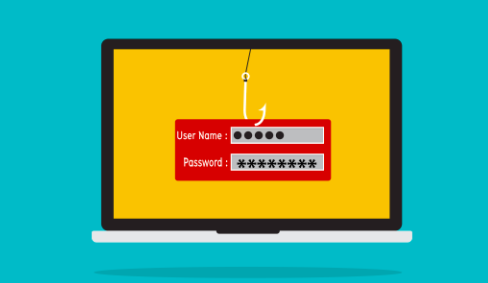
In this context, hackers can trick end users by sending requests (i.e phishing emails) to lure them to open and display some apparently innocuous content in a new tab on the browser, which in turn, prompts it to execute the hidden malicious script, than can operate on behalf of the user.
How attackers can exploit Bagisto open-source vulnerability
The graphic above illustrates the play-by-play on how attackers can exploit this vulnerability to perform CSRF and remove important functionalities, which could lead to denial of services and loss of data on an e-commerce platform.
In Step 1, the user first logs into the Bagisto admin page panel and subsequently accesses a seemingly innocuous website on another tab in the user’s browser. This website contains a malignant script (placed by the hacker), and the action of accessing this tab will lead to Step 3 where the script will be executed; the browser is instructed by said script to perform any possible harmful action on behalf of the user in Step 3. This course of user action culminates in Step 4 with the server executing the requested malicious actions, such as deleting data on the admin panel.
Nonetheless, affected users will be glad to know that all versions of Bagisto following v0.1.5 are untouched by this CSRF vulnerability. So, there you have it – update your application to the latest version of the Bagisto framework at the soonest to avoid further exposure!
Spread the word on these vulnerabilities and their fixes to help us improve application security all-around. In any case, you can certainly expect more engaging reads on PHP in the near future. Until then!
Knowing is half the battle. The other half is doing. Let Meterian help your dev team stay in the know and on top of the latest updates to secure your apps continuously. Sign up here to download the Meterian client today. You’ll get an instant analysis of your first project for free. See the risks immediately and know which components to remove or upgrade to secure your app.
At attention, app sec community! It has been an exciting past couple of weeks, and we have got some juicy vulnerabilities to dish on. From Apache commons to the extensively-used Nokogiri library, we will shed light on two compelling command injection vulnerabilities that rank highly on the common vulnerability scoring system (CVSS). Read along and spread the word to help combat against open source vulnerabilities.
CVE-2019-10086 The SuppressPropertiesBeanIntrospector class in versions before 1.9.4 of BeanUtils in Apache commons was not enabled by default
CVE-2019-5477 An inherent flaw in the Ruby Rexical gem v.1.0.6 or earlier, due to improper neutralization of special elements, resulted in a command injection vulnerability in the Nokogiri gem
Take heed, all you Java programmers: a vulnerability has been located within Apache commons, a provider of reusable open source Java component. There lies an arbitrary code vulnerability in the BeanUtils component, a set of utilities used for manipulation of JavaBeans code.
Within the BeanUtils component, there are several class types, or PropertyUtils beans, that support mechanisms for dynamically defining and accessing bean properties (i.e. Bean Introspection) – these sets of utilities that assist in getting and setting property values on Java classes utilise the BeanIntrospector interface for components that can perform introspection on bean classes.
Class Type
Description
DefaultBeanIntrospector
The default BeanIntrospector implementation
FluentPropertyBeanIntrospector
An implementation which detects write methods for properties used in fluent API scenario
SuppressPropertiesBeanIntrospector**
A specialized BeanIntrospector implementation which suppresses some properties.
Example of class types and their functions ** highlights affected component in this CVE incident
In the context of this security flaw, the vulnerability originates from the SuppressPropertiesBeanIntrospector class type. This BeanIntrospector class type is a standard implementation within a BeanUtils component which suppresses the ability for malicious attackers to circumvent class properties of Java objects to gain access to the classloader. However, this safeguard mechanism against third-party exploitations of Java objects, was not enabled by default for version 1.9.2 – 1.9.3 of BeanUtils.
This thereby allows attackers to manipulate classloaders and remotely execute arbitrary commands via class parameter, which would be detrimental to application security. Cyber attackers could potentially take advantage of this command injection loophole to inject malignant code into an application system through cross-site scripting (XSS), cross-site request forgery (XSRF), or drive-by attacks – this would then result in security breaches and a whole slew of inconvenience for organizations using compromised versions of this BeanUtils component.
Affected users would be relieved to know that the fix for this vulnerability, version 1.9.4 of BeanUtils, has since been published. The security patch for apache-commons-beanutils has fixed the security flaw by adding a special BeanIntrospector class; this class type comprehensively suppresses the ability for any third party to access the classloader through the outmanoeuvring of class properties available on all Java objects – we can declare with utmost confidence that the updated BeanUtils bean prohibits all class level property access by default.
At the risk of sounding like a broken record, application systems that are using versions before 1.9.4 of the BeanUtils component ought to migrate to the latest version at the soonest. Don’t say you haven’t been warned!
Affected versions: Rexical: 1.0.6 and earlier, Nokogiri: 1.10.3 and earlier
Mayday. I repeat, Mayday. Ruby users – watch out! A critical open-source security flaw has been located in Nokogiri, an open-source software library used to parse HTML and XML in Ruby. To provide some contextual information about its popularity, Nokogiri is indisputably one of the most downloaded Ruby gems – it has been downloaded over 240 million times from the rubygems.org. This translates into a potentially vast network of compromised users – it would be prudent for affected parties to understand the type of security flaw they are dealing with.
In versions Nokogiri 1.10.3 or earlier, a command injection vulnerability allows attackers to alter dynamically generated content on a web page by inserting HTML code into input mechanisms that lack effective validation constraints. These commands are then executed in a subprocess via the kernel#open method, which renders an application vulnerable to remote code execution due to improper neutralization of special elements used in a command injection.
This is due to the core functionality of the kernel#open method. When instructed with a file path (defaulting with ‘r’) , it treats the script as the name of a file to open using the specified mode; but when the file path starts with a pipe character ‘I’, it interprets it as a shell command and returns an IO class linked to the subprocess. In the context of this Nokogiri security flaw, these subprocesses are only exposed if the (undocumented) kernel#open method “Nokogiri::CSS:: Tokenizer#load_file” is executed with unvalidated user input in its filename.
This particular vulnerability exposure appears in the codework generated by Rexical gem versions 1.0.6 or earlier. The Rexical gem facilitates the Nokogiri library in generating a lexical scanner code that is used to parse CSS queries. In any case, the app sec community would be reassured to know that a patch which addresses this key vulnerability has been released as Rexical v1.0.7. And on an equally heartening note, Nokogiri has also performed an upgrade (i.e. Nokogiri v.1.10.4) to implement the latest patch for the Rexical gem in their library.
Now that you are all caught up on these CVEs, we hope this little piece of enlightenment would have made you more aware of the rampantness of open source vulnerabilities!
Knowing is half the battle. The other half is doing. Let Meterian help your dev team stay in the know and on top of the latest updates to secure your apps continuously. Sign up here to download the Meterian client today. You’ll get an instant analysis of your first project for free. See the risks immediately and know which components to remove or upgrade to secure your app.