Spotify vs Hacker, Round 2: Room for Improvement

5 minute read

We can all admit that as dreary as 2020 has been, it has at least been consistent in its dreariness. One organisation that can definitely vouch for this is music streaming giant Spotify. In true 2020 style, Spotify wrapped up the end of the year with a data breach on November 12th1 in which customers’ private account details were exposed.

Image of woman's left hand holding mobile phone with Spotify logo on screen
Photo by cottonbro on Pexels.com

Now, we may wonder why a hacker would be interested in Spotify accounts. Sadly, it’s not because they want to steal music inspiration from us. The details of targeted private accounts include customer display names, passwords, genders and D.O.B.’s which were leaked to various Spotify business partners. Speaking of business partners, we must also note that a Spotify breach does not solely expose Spotify users but may also put customers on connected devices or platforms at risk. The interconnectedness of our information sharing means that a problem for Spotify could be a problem for us all. This information is harvested by malicious actors to perform credential stuffing attacks, in which stolen passwords are used to uncover more stolen passwords for other sites and applications.

Meterian web scanner scan of www.Spotify.com, showing a security score of 0, a stability score of 99, and a licensing score of 72

Moreover, this would not be the last experience Spotify had of data breaches in 2020. A week later, a cyber criminal under the guise ‘Daniel’ infiltrated celebrity Spotify accounts including Dua Lipa and Lana Del Rey2. Although in this case it was not customers PII that was exposed, it still casts a shadow on Spotify’s claim of prioritising “protecting privacy and maintaining user’s trust” as outlined in an official statement released on the 9th December 20203.

Screenshot of twitter post of Lana Del Rey's  twitter account hacked

Enter now: Meterian web scanner, which we’ve used to perform a quick surface scan of http://www.spotify.com to identify what security, stability and licensing risks of open source components are within the website’s codebase. Here we can see that Spotify currently has a security score of 0 out of 100, with 1 known vulnerable component – jquery 2.1.3 which has at least one high and several medium threats as confirmed by NVD4. Although we do not know for sure what the unlocked route of entry was in Spotify’s case, this open source entry may well have been it. Subsequently, there is nothing stopping cyber criminals from using this chink in the armour to perpetrate similar breaches in the future. 

Although the vulnerability was discovered on November 12th, Spotify disclosed that it was present within the system from as far back as April. This means that more than 320 million user’s personal data was at risk for at least 7 months prior. Having carried out our own analysis in a matter of minutes, we immediately notice that the vulnerable component in use is actually more than three years out of date! We hope their web and mobile apps get greater scrutiny with regards to the maintenance of their open source dependencies. At Meterian we have developed a security platform that automatically identifies known vulnerabilities in software applications’ open source supply chain. To give our customers the best chance of resolving such issues, the platform can be easily integrated in software development teams’ DevOps process. The continuous nature of DevSecOps empowers development teams to be the first line of defence as they code applications.

Open source components have become fundamental components of applications that are relied upon for basic functionality and security. Since over 90% of applications consist of open source components nowadays, securing this part of a business’ IT and software has become an area that requires greater scrutiny in quality and maintenance.

Meterian helps ensure software applications’ open source supply chain is free from any known vulnerabilities that could compromise the application’s security and stability. Is it worth risking to damage the firm’s reputation and competitive edge in the market?

Curious to see what we can automatically report on your software applications? Detect known vulnerabilities in your open source software supply chain before your own applications become an Achilles heel. Get in touch and see how Meterian can make your company’s application security defence more robust. 

1 Whittaker, Zack. “Spotify resets passwords after a security bug exposed users’ private account information.” Tech Crunch, 10 Dec 2020, https:// techcrunch.com/2020/12/10/spotify-resets-user-passwords-after-a-bug-exposed-private-account-information/

2 “Dua Lipa and other Spotify artists’ pages hacked by Taylor Swift ‘fan’”. BBC News, 2 Dec 2020, https:// bbc.co.uk/news/technology-55158317.

3 “Spotify Breach Notice Letter.” Spotify, 9 Dec 2020, https:// beta.documentcloud.org/documents/20422370-spotify-breach-notice-letter-californiadocx

4 U.S. Department of Commerce. “National Vulnerability Database.” https:// nvd.nist.gov/vuln/search/results?adv_search=true&cpe_version=cpe%3A%2Fa%3Ajquery%3Ajquery%3A2.1.3


Spotify vs Hacker, Round 2: Room for Improvement

Update to terms and privacy policy

We have updated our terms and conditions and privacy policy as our business grows to serve more customers across the software industry in financial, cybersecurity, e-commerce, health, IT and telecommunications sectors.  We look forward to welcoming more customers who want to secure their open source software supply chain as part of secure app development. Software developers, security officers, quality assurance and legal compliance professionals can benefit from easy to read reports to streamline their decision making processes.

Get in touch to book a demo! 

Update to terms and privacy policy

Cybersecurity and IoT: Health Care and Well-Being in our Shared Spaces

Last updated: 07/07/2021

As the extraordinary situation of the COVID-19 crisis continues and more such supervirus incidents will occur, the benefits that IoT can provide will be even in more demand.  We are already seeing how IoT plays a significant role in modernising healthcare and disaster prevention, public safety and security, supply chain, and manufacturing and production.  

The Good We’ve Seen

In Hong Kong, the government has deployed smart wristbands to monitor city residents1 quarantined inside their homes.  Accelerating the timely discovery of outbreaks, these smart medical devices, powered with internet of things (IoT) technology, play an important role in containment of outbreaks like COVID-19 and prevent future pandemics.

Prior to COVID-19 pandemic, Japan was preparing for Tokyo 20202, the smartest Olympics ever with self-driving cabs to transport guests between sports venues, robotic guides, immersive virtual reality and crowd control directed by artificial intelligence.  Getting ready to welcome 11,000 athletes with 4 to 7 million on-site spectators from Japan and all over the world, this would have been a wonderful showcase of IoT tech and applications from a country that is already a technological leader in robotics and consumer electronics.  Unfortunately, the event is postponed 12 months, though the Olympic Committee resolves to have the games, it’s not clear how much of IoT tech applications will be used.

As public venues have been opening up in the past several weeks, there is a serious challenge of getting business going and the health and safety of people using the same facilities.  How can public toilets be kept safe and clean for everyone to use?  A common need at medical centres, restaurants, shopping malls, and any city where visitors would rely on public toilets. One new IoT company on the scene, Inferrix, has a solution for the “COVID Secure Washroom”, as described on their website: Inferrix wireless edge-intelligent sensors on the washroom doors show a red light to alert visitors if the washroom is unsafe to use. Any washroom can be installed in less than 1 hour.  We can easily imagine its application to be useful in office spaces near shared kitchen areas or study areas of public or university libraries as well.

When we reflect on the role that IoT played over the course of the pandemic, there are more notable instances. For example, telehealth consultations meant that there was a reduced risk of transmission that would otherwise have been prevalent with face to face consultations. Secondly, robot assistance is used to disinfect contaminated areas and objects, both protecting health carers and giving health carers more time to care for their patients. China was the first country to use Danish made UVD robots using IoT and help to disinfect treatment areas in nursing homes and clean patient rooms.

The Not So Good

In a 2019 study of security of IoT devices3, data revealed that more than twice the number of vulnerabilities were detected compared to six years earlier.  As covered in in our last blog post, cyber attacks from IoT risks have surged 300% and the UK and US are catching up on regulations to ensure companies safeguard devices. In March 2020 researchers found4 that more than half of all internet of things (IoT) devices are vulnerable to medium- or high-severity attacks, with 98% of all IoT device traffic being unencrypted.

As we’ve seen during the COVID-19 crisis, even when everyone else was rallying together, cyber criminals targeted vulnerable organizations in the health sector: data-stealing ransomware on US pharma company5 and Europe’s largest private hospital6, Czech republic hospital’s computer systems were attacked when their focus was on running coronavirus tests, and in the UK two construction companies building emergency hospitals were hacked7.

Such attacks can become more sophisticated and more dangerous to individuals using new health technology apps and devices used to provide medication or daily survival needs.

Bringing Tech Out for Good

Connected devices are available using cellular connectivity which are allowing doctors to rely on patients to use connected out-of-the-box devices for special readings to be sent directly to the doctor from the device (temperature, blood pressure, glucose meters).   Such technology is not limited to medical practitioners and is already available for anyone.  A user created a smart system to monitor his diabetic brother’s blood sugar8 (glucose) levels using an app, a data logging platform that processed data from his brother’s glucose sensor to make his own healthcare monitoring system.

Similarly, Australia saw its first ‘virtual hospital’9 open shortly before the COVID-19 pandemic hit through Royal Prince Alfred Hospital (RPA) in Sydney. Data from pulse oximeters used to measure oxygen saturation levels and heart rates along with armpit patches to track temperature were transmitted to the hospital. In addition, video-consultations allow coronavirus patients to receive the care they need without the risk of transmission. 

Recently, we have seen evidence of health providers recognise the risks surrounding IoT devices and the need to incorporate security standards to protect against malicious hackers. For example, University Hospitals of North Midlands NHS Trust has opted to trust Ordr with providing a systems control engine (SCE)10 which will locate and secure every connected device. This includes Internet of Medical Things (IoMT), Internet of Things (IoT) and Operational Technologies (OT) devices.

Security, safety, and data privacy considerations are important aspects of designing, building and maintaining such systems to protect the identity and well-being of the individual.  We’d hate to think about incidents where devices give wrong information due to a malicious actor – getting the wrong medication, dosage, or advice could have serious, even lethal consequences.  Having IoT devices and apps to create a safer world requires more scrutiny and protective measures designed as part of the solution.  As many of these solutions will be designed for one person’s use, customised to their medical needs or specific daily routines, it’s essential they are maintained, updated, and when no longer maintainable that they are properly turned off and disposed of.

Check out IoT For All Podcast with Christopher Schouten of Kudelski Group11.  He talks about necessary considerations to secure IoT projects, making sure they can scale as well as be practical in protecting what is valuable. 

Although the transformational journey to an IoT world seems daunting, the capabilities of IoT to bring high-tech care and consultancy out of the clinic and into homes and vulnerable communities across the world presents a thrilling opportunity.  Health care and IT experts, technicians, research scientists and security experts are collaborating, as are carers, policy makers and administrators.  Altogether, the confluence of tech and human intelligence will continue to evolve and strive to protect all that is worth protecting.  COVID-19 and cybercrime are making seismic shifts in worldwide health and safety, threatening our prosperity. Let’s defend the world, use technology for good and build the world we want.

If you are a developer or have a software development team using open source components, learn how  Meterian automates monitoring of software applications for open source risks and vulnerabilities.  Read about Meterian-X: Invisible Security for your Open Source Security Management in IoT systems and devices.

1 Doffman, Zak. “Coronavirus Police Surveillance Tags Are Now Here: Hong Kong First To Deploy.” Forbes, 17 March 2020, https: //www.forbes.com/sites/zakdoffman/2020/03/17/alarming-coronavirus-surveillance-bracelets-now-in-peoples-homes-heres-what-they-do/?sh=227b12984533

2 Hallet, Rebecca. “Tokyo on track for smartest Olympics ever”. Raconteur, 20 February 2020, https ://www.raconteur.net/technology/internet-of-things/iot-tokyo-2020/

3 Coble, Sarah. “Vulnerabilities in IoT Devices Have Doubled Since 2013”. Info Security, 17 September 2019, https ://www.infosecurity-magazine.com/news/vulnerabilities-in-iot-devices/.

4 O’Donnell, Lindsey. “More Than Half of IoT Devices Vulnerable to Severe Attacks”. threat post, 11 March 2020, https:// threatpost.com/ half-iot-devices-vulnerable-severe-attacks/153609/.

5 Whittaker, Zack. “Hackers publish ExecuPharm internal data after ransomware”. Tech Crunch, 27 April 2020, https: //techcrunch.com/2020/04/27/execupharm-clop-ransomware/.

6“Europe’s Largest Private Hospital Operator Fresenius Hit by Ransomware”. KrebsonSecurity, 6 May 2020, https: //krebsonsecurity.com/2020/05/europes-largest-private-hospital-operator-fresenius-hit-by-ransomware/.

7 “Coronavirus: Cyber-attacks hit hospital construction companies” BBC News, 13 May 2020, https: //www.bbc.co.uk/news/technology-52646808.

8 Anx, Quintessant. “Healthcare IoT: Monitoring Diabetes with Logz.io” Logz.io, 11 December 2018, https: //logz.io/blog/healthcare-iot-monitoring/.

9 Minion, Lynne. “‘Flattening the curve’ with virtual care in Australia'” Healthcare IT News, 30 June 2020,  https: //www.healthcareitnews.com/news/europe/flattening-curve-virtual-care-australia

10 Crouch, Hannah. “University Hospitals of North Midlands deploys Ordr cyber security solution”. digital health, 6 May 2021, https: //www.digitalhealth.net/2021/05/university-hospitals-of-north-midlands-ordr/

11 “Security Challenges in the IoT Landscape | Kudelski Group’s Christopher Schouten”. iot for all, 5 May 2020, https: //www.iotforall.com/podcasts/e064-iot-security-considerations.

Cybersecurity and IoT: Health Care and Well-Being in our Shared Spaces

jQuery, Javascript vulnerability of the month

Artwork by Marco Sciortino

Here we are! Guess what’s vulnerable again?
On April 10th 2020 it was made public that a vulnerability has been exploited in the most popular Javascript library ever implemented: jQuery 3.4.1.

Why is jQuery 3.4.1 vulnerable?

Vulnerability score: 5
Platform: Javascript
Components: jQuery, all versions before 3.5.0

When jQuery is invoked, it reads the HTML document and returns requested fragments of it.
Now, while reading the document it might find that the one or more requested fragments are not in the correct format, so it tries to translate them. Although most of the times the translation is correctly performed, it’s been demonstrated that in particular cases the conversion (or parsing) could lead to an XSS cross-site scripting vulnerability.

An XSS cross-site scripting is a type of code vulnerability that allows attackers to insert malicious code into the web pages viewed by other users. It might be exploited to steal information such as access tokens or other sensitive information. This is what a criminal or Black Hat hacker would do.

This is what a criminal or Black Hat hacker would do. White Hat hackers, on the other hand, would behave ethically and use their software White Hat hackers, on the other hand, would behave ethically. Using their software engineering knowledge, White Hat hackers would show how to exploit a vulnerability: publish useful information about it to make sure both users and owners of the vulnerable library could take actions to prevent attacks.

What actions are required to safely update?

The first thing to know is that all the old versions of jQuery have some sort of vulnerability.  Up until April 10th, version 3.4.1 was the only safe version available.  Fortunately, the new minor release 3.5.0 has been published to fix the XSS security vulnerability.

As suggested in the jQuery release note, updating to this latest version might break your code as, to prevent the abuse of this vulnerability, the HTML element phrase is no longer converted.
Therefore, a code review might be in order.

There is a lot of time-consuming effort involved in staying on track with all the latest code vulnerabilities as they are discovered but, fortunately, Meterian can help you with that.

When added to the CI/CD pipeline of any application, Meterian will automatically detect such vulnerabilities, or even fix them for you, and it will help you avoid the risk of an attack before it becomes a problem.

Beat open source vulnerabilities with Meterian.

jQuery, Javascript vulnerability of the month

Love Your Developer: How to maintain & secure your open source components?

6min read

Happy Valentine’s Day! Meterian is feeling the love, so we want to share it by telling you the best way your business can love their developers! In this article we highlight the benefits and costs of using open-source software.  We’re also going the extra mile to give you tips on how to secure and maintain these components without slowing down your developers – the guardians of your business’ software that can propel you ahead of competitors.  

Here’s a little history lesson for you to begin with! Back in the 1940s-70s, software innovated at a slow pace. It wasn’t even regarded as a valuable asset in the working environment. The 1980s came and we see how software copyright was introduced, commencing a period where there was a boom in software innovation and a burst in software companies.  As the decades went on, people started to realise the value of open source software.

In 2000, the use of open source projects as well as components, began to grow significantly. Market research has predicted the global market size to grow from USD 11.40 billion in 2017 to USD 32.95 billion by 2022. Open source software has lowered development costs and accelerated innovation by reducing time to market. Now we see that companies who innovate early are 67% more likely to outperform.

Benefits of open source software 

Sometimes taking advantage of free resources is better. For example, in 2010 the use of open source was so common, it became a table stake. All companies were using it, otherwise they would fall at a disadvantage to their competitors. Open source solutions speed up software/hardware solutions, save money, provide flexibility and help companies stay on top of technological developments. This is supported by a survey which found 53% of companies have an open source program or plan to establish one in the near future

Developers are able to become creative and help solve problems in the software space when using open source solutions. It is the consumer and producer relationship that makes open source software thrive. As a result, there is more software availability for all users without having to reinvent the wheel. This in turn helps organizations. Recent research from Harvard Business School has shown that open source contributing companies capture up to 100% more productive value from open source than companies that do not contribute back. It creates a snowball effect: the more companies use it, the more the community is able to survey, criticize and praise it. Therefore, this strengthens the quality of the software used, including its security, usability and stability.

Open source software also comes with management benefits. Organizations tend to struggle when managing huge volumes of structured and unstructured data. This is where open source solutions can help! It helps to simplify business processes, as well as saving resources for things which are not needed for the success of a business. Essentially, it provides more flexibility for the company.

Taking a look at customer value is important. Due to the flexibility of open source software solutions, companies are able to customize to suit the needs of their particular customers. For example when you integrate two pieces of software. This requires less time than if the company were to write the integration software from scratch themselves. Therefore, it benefits both the company and their customers as well. Customers might even be willing to pay more for better solutions if they see this software is meeting their needs so efficiently and rapidly. It is all about viewing open source software as a resource and a powerful motivator.  

Costs 

When it comes to the law, open source solutions can sometimes be restricted to certain countries. For example, GitHub made headlines when it made it difficult for developers in Cuba, Iran, North Korea and Syria to access private repository services. There have been changes for open source licences in response to these types of situations, as it should be allowed to continue to expand and not interfere with international rules on software access. So companies should always know what licences are tied to the software they are using to avoid an IP breach. Read our past blog post on how the wrong licence can harm your business, if you haven’t already!

Moreover, open source components are attractive to cyber attackers. Firstly, open source vulnerabilities within components are discovered daily. Secondly, traditional testing tools and methods are ineffective in identification and therefore few companies understand the components being used in their applications. This lack of awareness leaves organizations increasingly exposed to an attack. For example Hollywood Presbyterian Hospital in California suffered a ransomware attack due to an outdated JBoss server software. The attacker uploaded malware to the out-of-date server without any interaction with a victim. This resulted in delayed patient care and the hospital had to pay $17,000 to recover access to files and the network.

A further cost or strain is the need to constantly maintain, test and secure these components. For example, in 2018 Sonatype released its fourth annual State of the Software Supply Chain Report and showed how software developers had downloaded more than 300 billion open source components in the past 12 months, 1 in 8 of those components having contained known security vulnerabilities.

Not catching these security bugs early on in the development process can lead to very costly and damaging outcomes.

How to maintain and secure open source components?

Firstly, you can start by making an inventory of all your open source components used when developing software. This inventory must include all the components, versions in use and the download locations for each project. Software bill of materials (SBoM) would be this inventory.

There is also a need to map out any known security vulnerabilities. The National Vulnerability Database (NVD) is a great place to provide information on publicly disclosed vulnerabilities in open source software. However, make sure you do not use this as your sole source for vulnerability information, as sometimes not all vulnerabilities are reported and the format of NVD records make it difficult to see which versions have been affected.   Meterian uses several sources in addition to the NVD.

Open source solutions are a brilliant resource. But to maintain its benefits there needs to be an effort to secure the open source components to lower the risk of them being vulnerable to cyber attacks. For example, a study conducted by Kula et al. on migrations of 4600 GitHub projects showed that 81.5% of them do not update their direct library dependencies, sometimes even in cases when they have been affected by publicly known vulnerabilities. This emphasizes the lack of awareness about security vulnerabilities within open source software. For this reason, to secure your open source components there is an urgency to upgrade software and keep on top of the known vulnerabilities.

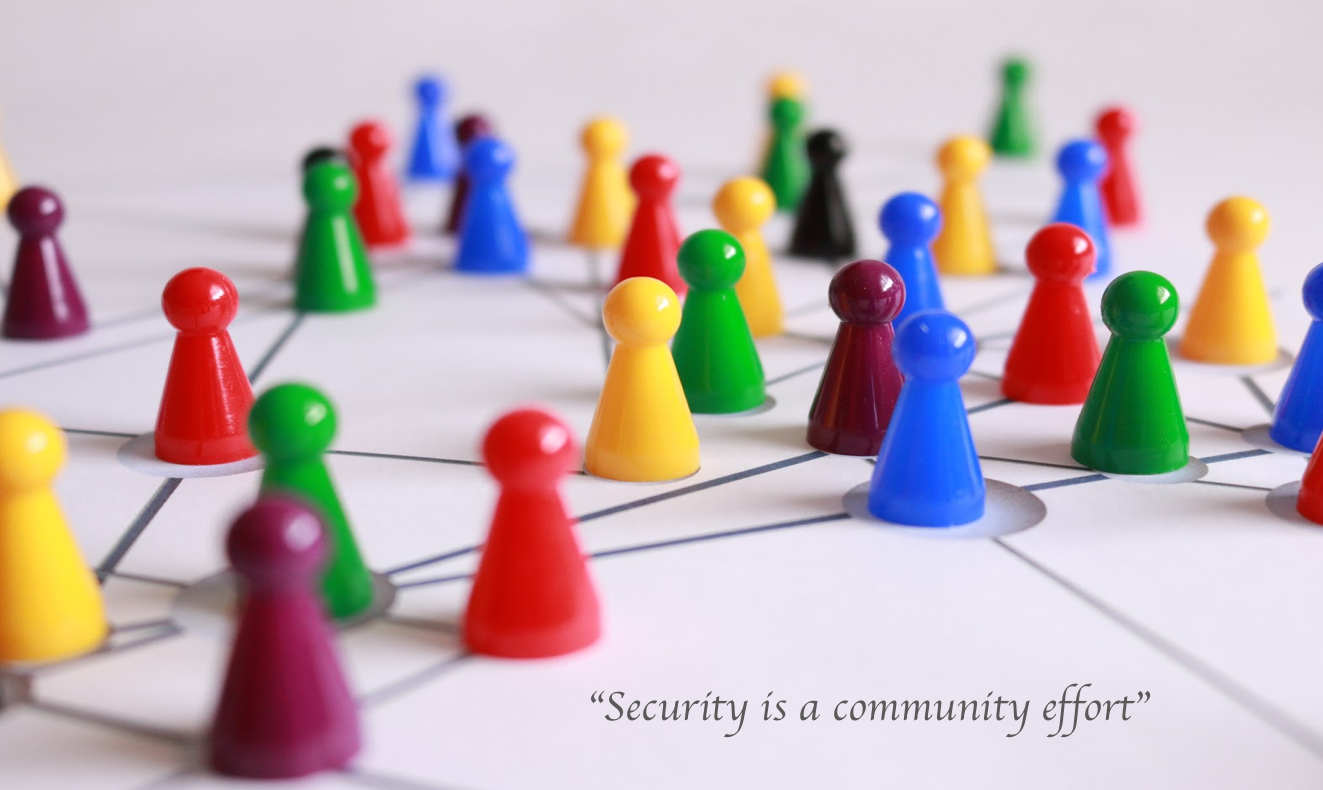
https://www.pexels.com/photo/close-up-photography-of-yellow-green-red-and-brown-plastic-cones-on-white-lined-surface-163064/

Security is a community effort. There is a testing process for each project that is open to everyone. Developers using open source software are able to judge. This community of users are constantly evaluating and testing the security of certain components. Following this, there will be feedback on issues that have been found. For this reason, building open source software is safer than proprietary software because more people can test and contribute to its security. At the same time, there must be care about the code contributions accepted. A governance process and reviews in regards to any open source contribution should be made.

Constant vigilance is key. More than 3,600 new open source vulnerabilities are discovered every year and a significant amount appear daily.  Developers need to make sure their use of open source software is secure. Asking questions such as, is the code I am using good? Does it have any bugs? Due to vulnerabilities being identified on a daily basis–some have more high risk than others–there needs to be a practice within organizations to monitor or test each time the software changes. 

Meterian helps businesses get the most out of their software investments

Open source software has been changing how our world works, giving us a sustainable ecosystem that can work for everyone as long as it is looked after.

Meterian can automatically inventory your open source components and analyse them to check if they are up-to-date or have any publicly disclosed security and licence risks. Get started on building a proactive defence for your customer data and software IP.  Love your developers and let them innovate freely while using Meterian to secure your open source components. We can block insecure code before it goes live.  It will save you and your developers time and money, allowing your business to be less vulnerable to cyber attacks.  

Check if there are any open source security holes in your company’s website that puts your business at risk of a data or IP breach before it’s too late.

Try our free webscanner today.

Love Your Developer: How to maintain & secure your open source components?

Data Protection Day!

Image of a screen if the label 'Security' and a cursor hovering on it.
https://www.pexels.com/photo/internet-screen-security-protection-60504/

Yesterday, 28th January was an important day… The Council of Europe celebrated this year the 14th edition of Data Protection Day. 

This practice was to raise awareness about good practices in this field, informing users about their rights and how to exercise them.

This date is aligned to the anniversary of the opening for signature of the Council of Europe’s Convention 108 for the Protection of individuals in relation to automatic processing of personal data. For the past 30 years this has been a cornerstone of data protection, in Europe and around the world.

Why is Data Protection so important?

Data protection issues are very present throughout everyone’s lives. Not to mention in the work environment, in public relations, in the health sector, when buying goods and services, in travel or merely whilst using the internet.

However, not all people are informed on their rights. For this reason, the 28th January has been allocated to inform more users on their rights and so that data protection professionals address data subjects. It is important our digitally advanced society understands what personal data is collected from them and why, as well as what their rights are when their data is processed. This in turn, will help users be aware of the risks which comes with illegal mishandling and unfair processing of personal data.

Meterian can help!

Here are a list of our blogs which can help users be more cyber resilient and diligent when it comes to managing sensitive data.

Read also our past blog posts about vulnerabilities in:

to make sure your apps are not susceptible to such exploits that would risk data confidentiality.

Data Protection Day!